Content
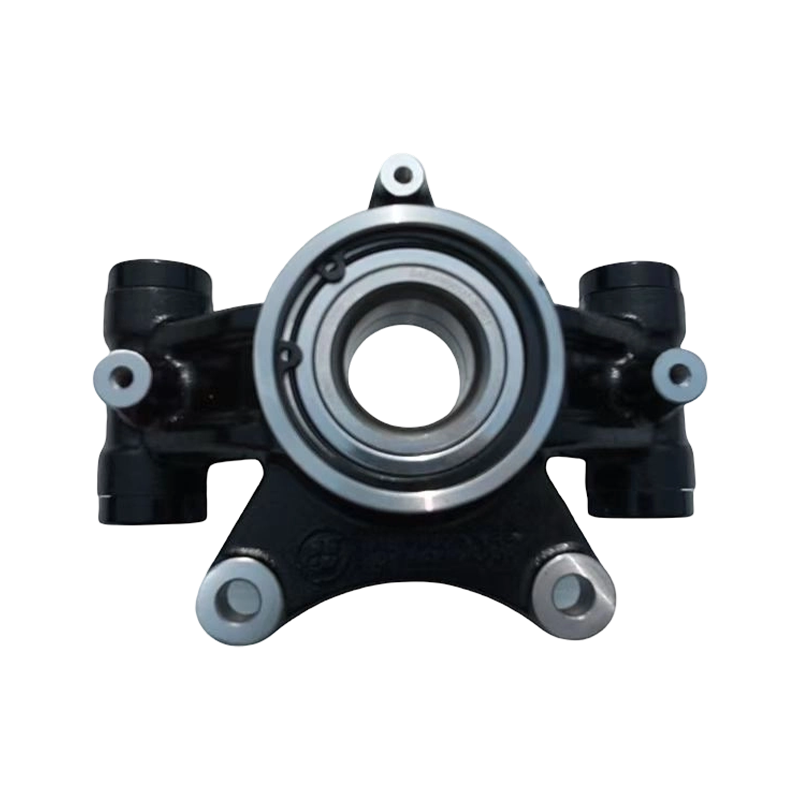
An axle support bearing is a sealed or greased bearing unit, usually housed inside a bracket, that suspends an intermediate section of a two-piece or three-piece rear axle shaft and keeps it centered and aligned as it spins at driveline speed. On many rear-wheel-drive trucks, vans, and SUVs, this bearing is mounted inside a component commonly called a rear axle support, sometimes referred to as a center bearing support or carrier bearing bracket, which bolts to the vehicle's frame or crossmember. Without this support, the mid-section of a long driveshaft or axle assembly would whip, vibrate, and eventually fail under normal driving loads. The sections below explain how this bearing works, what wear symptoms to look for, and how it fits into the broader wheel end and drivetrain system.
A rear axle support performs a structural and mechanical role at the same time. Structurally, it mounts to the vehicle's frame rail or a dedicated crossmember, providing a fixed anchor point for the middle of the axle or driveshaft assembly. Mechanically, the bearing pressed into the support allows the shaft to continue rotating freely at that fixed point without transmitting excessive vibration or side load into the frame.
On vehicles with a long wheelbase or a two-piece drive axle configuration, a single unsupported shaft running the full distance would flex and resonate at highway speeds, creating harmful torsional vibration. Splitting the shaft into sections and supporting the joint with an axle support bearing keeps rotational speeds stable and reduces stress concentrated at the universal joints on either end.
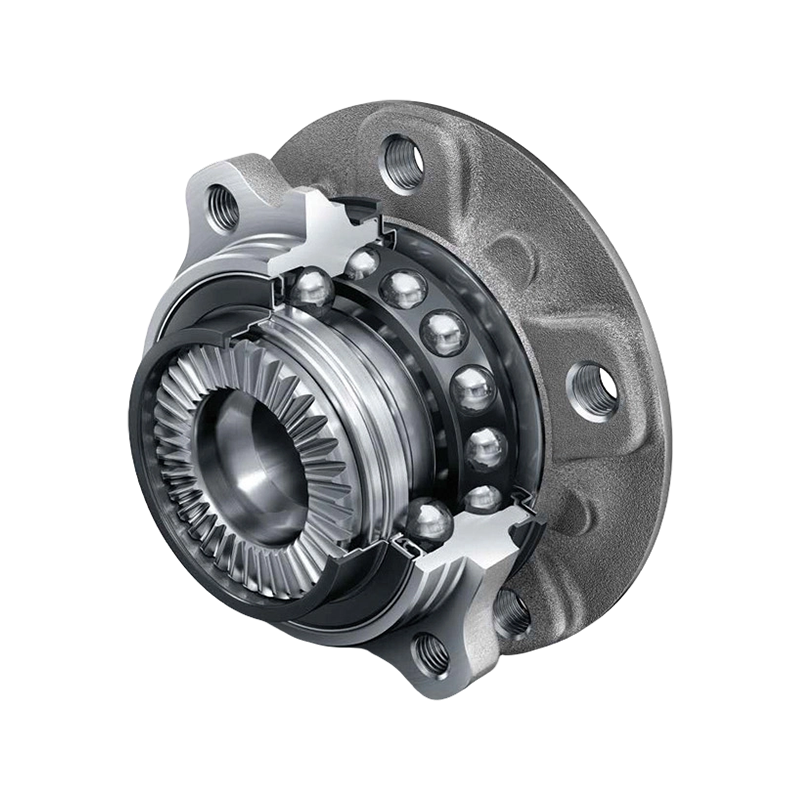
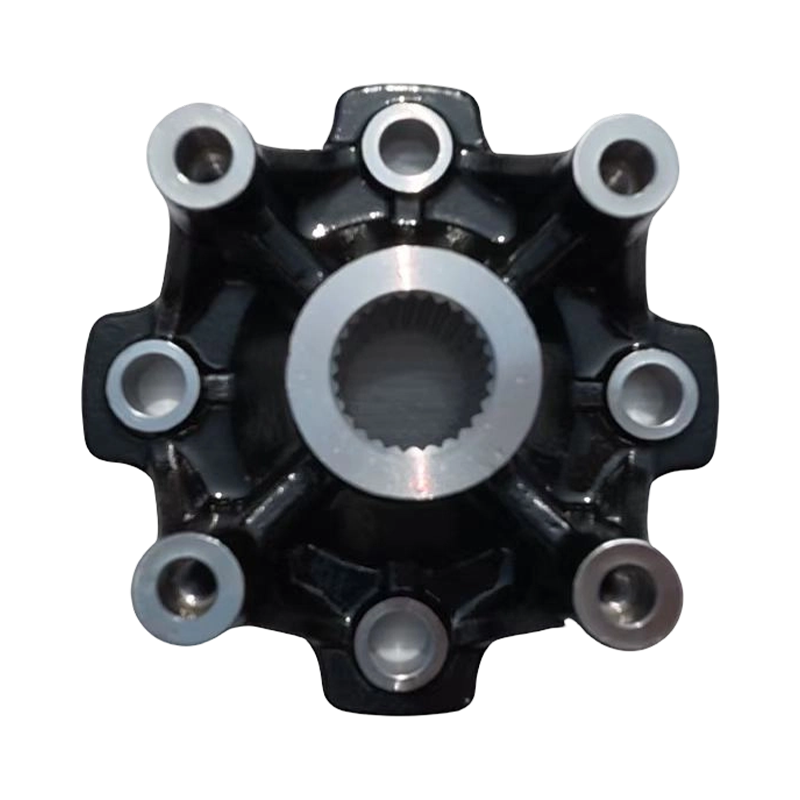
Most rear axle support units share a similar internal structure, though exact dimensions and mounting patterns vary by vehicle make, model, and axle configuration.
The rubber isolator found in many rear axle support designs is a critical detail: it does more than cushion vibration, it also allows for small amounts of misalignment as the suspension articulates, which prevents the bearing itself from being loaded unevenly during normal driving.
Because a rear axle support bearing sits under constant rotational load and is exposed to road contamination, wear develops gradually before becoming noticeable. Recognizing the early symptoms below can prevent a worn bearing from causing secondary damage to the axle shaft or universal joints.
| Symptom | Likely Cause | Urgency |
|---|---|---|
| Growling or humming that changes with vehicle speed | Worn or dry bearing rollers | Moderate |
| Vibration felt through the floor at highway speed | Bearing play or deteriorated rubber isolator | High |
| Clunking noise during acceleration or deceleration | Excessive shaft movement at the support point | High |
| Visible cracking or sagging of the rubber isolator | Age-related rubber degradation | Moderate |
A vibration that grows steadily worse over a few thousand miles is one of the more reliable indicators that a rear axle support bearing has developed internal play and should be inspected before it damages adjacent driveline components.
An axle support bearing is one part of a broader wheel end and drivetrain system, and its condition can influence the performance and wear rate of nearby components.
Excess play in the axle support bearing allows the shaft to move slightly off its intended rotational path, which increases the operating angle at nearby universal joints and can accelerate their wear over time.
While the wheel hub bearing supports the wheel itself, the rear axle support bearing supports the driveline shaft further inboard. Both are wheel end and drivetrain components that work together to keep rotational forces properly contained, and diagnosing noise correctly often requires isolating which bearing is actually generating the sound.
On some multi-piece axle configurations, the support bracket also helps maintain the correct pinion angle between the axle sections and the differential, which affects how smoothly power is transmitted to the rear wheels.
Because a failed axle support bearing can allow the shaft to contact surrounding chassis components, timely inspection and replacement are important for both safety and cost control.
Most manufacturers recommend inspecting the rear axle support during routine driveline service intervals, particularly on vehicles used for towing or frequent highway driving, where sustained rotational speeds accelerate bearing wear.
When sourcing a replacement axle support bearing assembly, matching the exact bracket geometry, bearing bore diameter, and bolt pattern to the original equipment specification is essential, since even small dimensional differences can cause misalignment or premature bearing failure. Units forged or cast from high-strength ductile iron, or machined from aerospace-grade aluminum alloy, generally maintain tighter tolerances under repeated load than lower-grade cast substitutes.
A bracket manufactured from properly stamped or cast steel resists fatigue better than a thinner, lower-grade substitute, and a sealed bearing with adequate internal lubrication capacity typically outlasts an open or lightly sealed design in road-going conditions.
Verifying fitment against the vehicle's year, make, model, and specific axle configuration, rather than relying on a general part description, reduces the chance of installing a support bracket with an incompatible mounting pattern or shaft diameter.
In short, an axle support bearing is a small but essential wheel end component that keeps a segmented rear axle shaft aligned and rotating smoothly under load. A worn rear axle support rarely fails without warning, and paying attention to growing vibration, humming, or clunking noises allows most drivers to catch the problem before it damages surrounding driveline parts.
When sourcing a replacement, prioritizing exact fitment, bracket material quality, and sealed bearing construction over price alone helps ensure the new support performs as reliably as the original equipment part it replaces, keeping the rear axle assembly running smoothly for the long term.
+86 133 0665 0391
No. 169 Songpu Road, Cidong Industrial Zone, Cixi City, Ningbo City, Zhejiang Province, China
OEM/ODM Automotive Chassis Sealing Components Manufacturer
EV Drivetrain Components Supplier