

 English
 中文简体
 عربى
 Español



How to Balance a Driveshaft: Correct Steps, Tolerances and Common Mistakes
Posted by Admin | 02 Oct
Content
- 1 Why a Driveshaft Loses Balance in the First Place
- 2 Rule Out Everything That Only Looks Like Unbalance
- 3 Two Real Roads to a Balanced Shaft
- 4 What a Proper Balancing Job Actually Looks Like
- 5 Trying It Yourself in the Garage
- 6 Problems That Come Back Even After a Perfect Balance
- 7 Choosing Shafts and Boots That Stay in Balance
A pickup that shakes hard at 55 mph and smooths out completely at 45 mph is almost always fighting driveline unbalance, not a bad tire. The usual culprit is a balance weight that rusted off years ago. A correctly balanced shaft typically needs only 15 g to 30 g of correction weight on a balancing machine to erase that shake. The catch is that the shaft must also be straight, the joints must move freely, and the flanges must run concentric. If any of those three is wrong, no balancer on the market can save the job.
Why a Driveshaft Loses Balance in the First Place
Here is the conclusion first: a driveshaft almost never goes out of balance on its own. Something changed. It lost weight, it gained a bend, or a joint developed enough play to throw the shaft around at speed.
The realistic causes, in the order they show up in a repair bay:
- A welded balance weight fell off. Road salt, gravel strikes and frame contact all take their toll on a thin weld.
- The tube has a dent or a bend, most often after the shaft was lifted on a hoist arm or the axle bottomed out hard.
- A universal joint or CV joint is worn or seized, so the shaft is being pushed off centre once per revolution instead of rotating cleanly.
- Spline wear, or a two-piece shaft reassembled with the splines one tooth out of phase.
- Flanges that were unbolted and refitted in the wrong orientation, breaking up a matched pair that was balanced as an assembly.
- A thick layer of dried mud or grease baked onto one side of the tube. Wash the shaft, and the vibration disappears — that is your answer.
Notice that only the first two are strictly balance problems. The rest produce the same symptom but need a different fix.
Rule Out Everything That Only Looks Like Unbalance
Before anyone touches a balancing machine, narrow the field with a few targeted questions. The single most useful clue is whether the vibration follows road speed or engine speed.
| What the driver reports | Most likely cause | First check |
|---|---|---|
| One distinct speed makes it shake; above and below that it is smooth | Driveshaft unbalance | Run the vehicle on stands and confirm the exact speed |
| Shake rises with engine rpm in every gear | Engine, clutch or flywheel | Hold road speed constant and change gear |
| Vibration only under acceleration | Joint working angle or worn joint | Check joint play and driveline angles |
| Low growl in a steady bend | CV joint or wheel-end bearing | Inspect boots, grease and bearing play |
| Shake felt while braking | Rotors or wheel end | Measure brake surface runout |
If the shake tracks engine rpm rather than road speed, balancing the shaft is wasted money. If it tracks road speed and peaks in one narrow band, you are looking at a genuine unbalance or a runout problem, and the next step is to decide how to correct it.
Two Real Roads to a Balanced Shaft
Choosing between bench balancing and in-vehicle balancing is not a matter of taste. It is a trade-off between precision and convenience, and the right answer depends on how the vehicle is used.
Bench Balancing Off the Vehicle
The shaft comes out, goes onto a balancing machine, and the machine reports both the amount and the phase angle of the unbalance. Correction weights are then welded at the opposite side. This is the only route that also allows the tube to be straightened and measured for runout, and the only route that can realistically reach a tight residual tolerance. The cost is downtime: the vehicle is out of service, and on a two-piece shaft both halves should go to the shop together so their spline phase is preserved.
In-Vehicle Balancing
The vehicle stays on a hoist with the drive wheels spinning free, the shaft is run up to the speed that produces the worst vibration, and weights are added or repositioned until the shake fades. The advantage is that the whole rotating assembly is balanced together — shaft, flange and pinion as one unit. The disadvantage is that accuracy is far lower, often only cutting the vibration by half, and the work has to be done with real attention to safety.
What a Proper Balancing Job Actually Looks Like
A shop that strips a shaft, spins it once and welds a random weight is guessing. The proper sequence looks like this:
- Clean the shaft first. Clumped mud, dried grease and flaking undercoat all carry real weight on a balancer and will send the operator chasing a phantom.
- Measure runout. Support the shaft in V-blocks and sweep the tube near both ends with a dial indicator. Acceptable limits vary by shaft, but many passenger-car shafts should sit within roughly 0.010 in to 0.020 in of total indicated runout.
- Confirm joint freedom. A stiff or notchy universal joint, or a dry CV joint, cannot be compensated for with weights. Fix the joint, not the balance.
- Run a low-speed baseline on the machine and record the unbalance in grams and the phase angle.
- Fit a trial weight of known mass, run again, and let the machine calculate the final correction from the change in amplitude and phase.
- Weld the final weight at the calculated position. Keep heat input controlled so the tube does not distort and undo the work.
- Verify. Re-run the shaft and repeat until the residual unbalance falls inside the limit, commonly around 10 g to 15 g for a passenger-car shaft, with heavier commercial shafts often accepted at 20 g to 30 g.
Skipping step two or step three is how a shaft comes back to the shop a second time.
Trying It Yourself in the Garage
If the vehicle needs to stay on the road this week, a careful field balance can often pull the vibration down to something tolerable. The method is crude but effective.
- Raise the rear axle safely on stands, chock the front wheels and make sure the drive wheels can spin freely.
- Run the driveline up to the speed where the vibration is worst. Note the tachometer reading so you can repeat it exactly.
- Clamp a heavy-duty hose clamp around the tube a few inches from the end — not next to a weld seam.
- Run again, then rotate the clamp roughly 45 degrees around the tube and run once more. Keep stepping the clamp around until you find the position where the vibration is smallest. That position marks the light side of the shaft.
- Weld a weight of equivalent mass in that spot. Do not leave the clamp doing the job permanently; it will creep and it will rust.
- Confirm the result at the same rpm. If the vibration climbs sharply with speed instead of settling down, stop and send the shaft to a balancing shop — a shaft run past its critical speed is a genuine safety problem, not an annoyance.
Field balancing typically gets you most of the way there. It rarely matches a bench job, and it should never be treated as a permanent repair on a vehicle that carries loads or tows.
Problems That Come Back Even After a Perfect Balance
If a freshly balanced shaft starts shaking again within a few hundred miles, the balance was not the real fault. Check these before blaming the machine:
- Driveline working angles. A two-piece shaft reassembled with the splines a tooth out of phase will vibrate in a way no weight can correct.
- Centre support bearings with collapsed rubber, wrong preload, or a worn housing.
- Loose flange bolts, or burrs and paint on a mating face that stop the flange seating flat.
- A change in ride height or pinion angle after a lift kit, spring replacement or axle repair.
- Pinion or differential carrier bearings worn enough to imitate a shaft problem at similar road speeds.
Each of these produces a speed-related vibration, and each one will survive any amount of correction weight.
Choosing Shafts and Boots That Stay in Balance
The cheapest balance problem is the one designed out at the factory. A shaft built from seamless tube, straightened before welding, balanced as an assembly and fitted with weights welded by mass and position will hold its tolerance for the life of the vehicle. That is the standard worth asking a supplier about, because a shaft that is straight and free of joint play is the only kind that stays smooth.
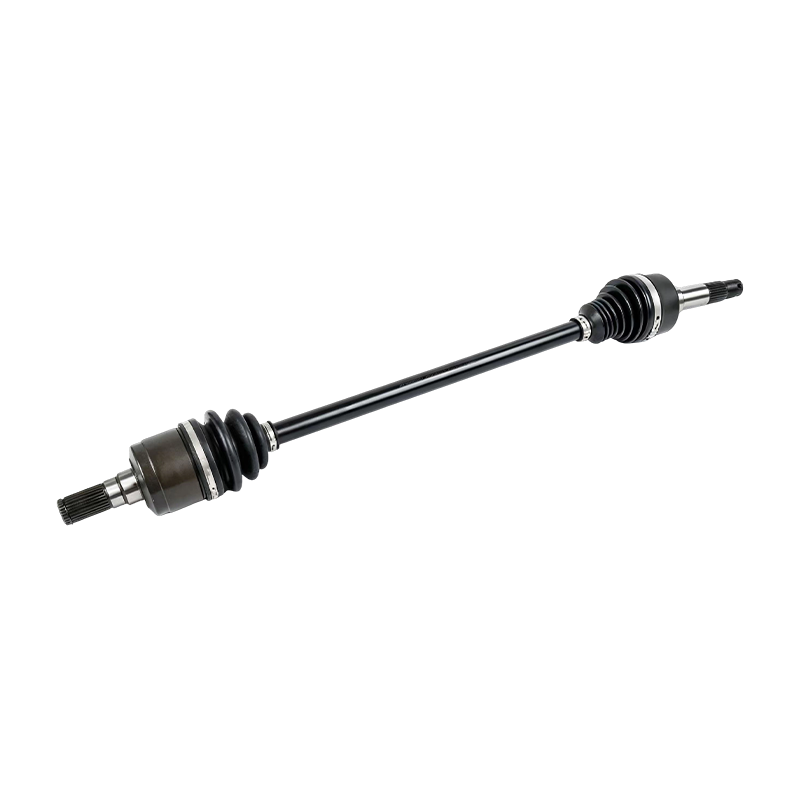
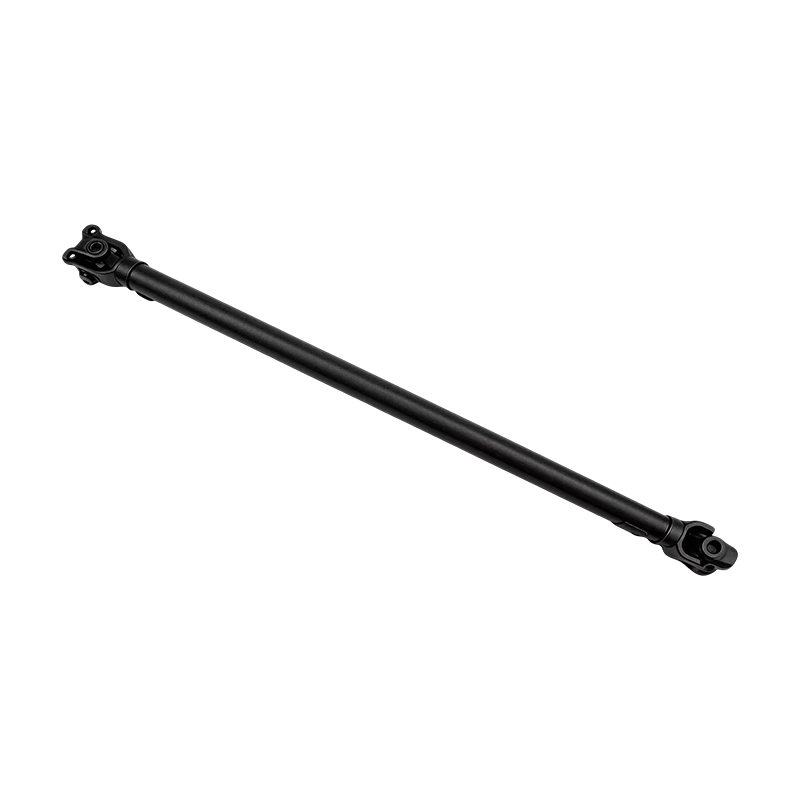 Prop ShaftOur prop shaft(intermediate shaft assemblies) are critical components in modern automotive drivetrain systems, specifically engineered to bridge the drive axle and the...View Product →
For vehicles that run a full driveline rather than a single shaft, the assembly matters just as much as the tube. A driveshaft is made up of a tube, universal or constant velocity joints, a splined sleeve and the balance weights — and every one of those parts contributes to how the finished unit behaves at speed. You can read more about how the components of a driveline fit together if you are specifying a replacement rather than repairing an original.
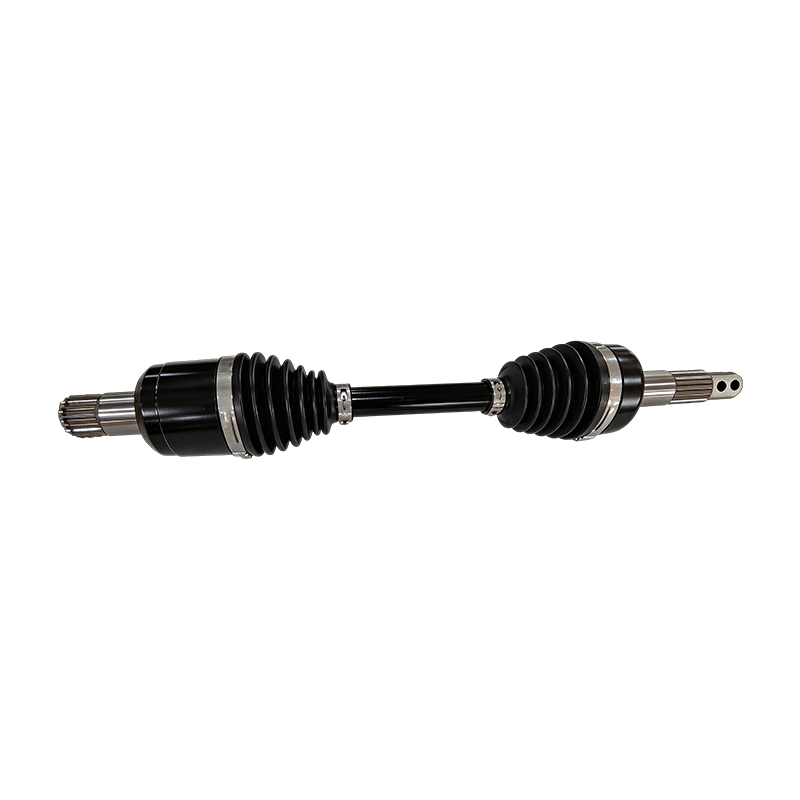 CV Axle Assembly/Drive ShaftOur drive shaft / CV axle assembly are designed and developed in strict accordance with OE (Original Equipment) standards. Utilizing industry-leading high-precision CN...View Product →
On front-wheel-drive and independent-rear vehicles, the same logic applies to the axle shaft. A torn boot is a one-way ticket to vibration: grease flings out, water and grit move in, the races pit, and play appears where there should be none. Checking boots at every oil change costs nothing and postpones shaft replacement by tens of thousands of miles.
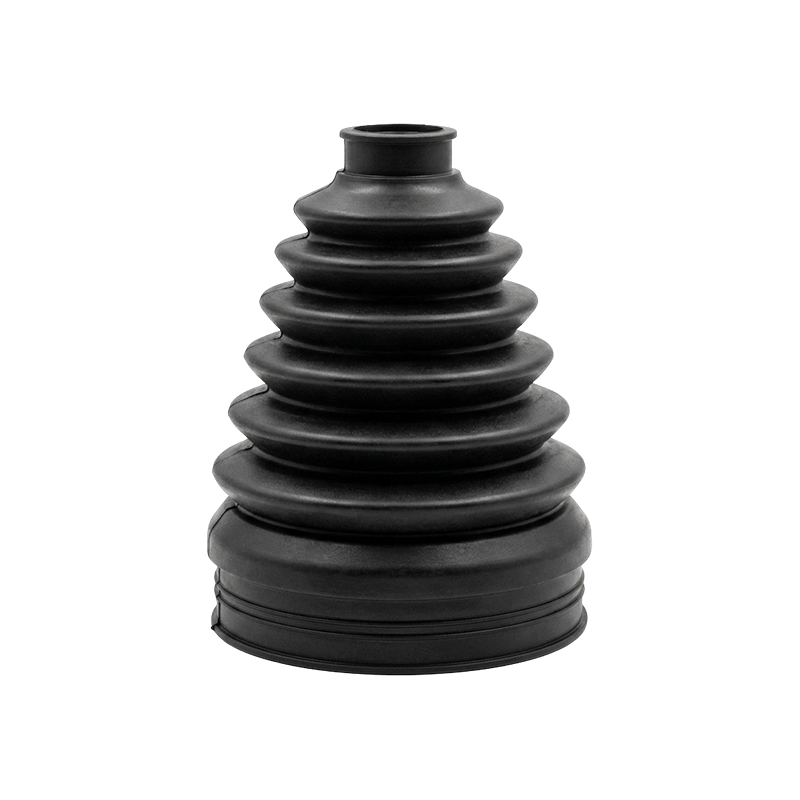
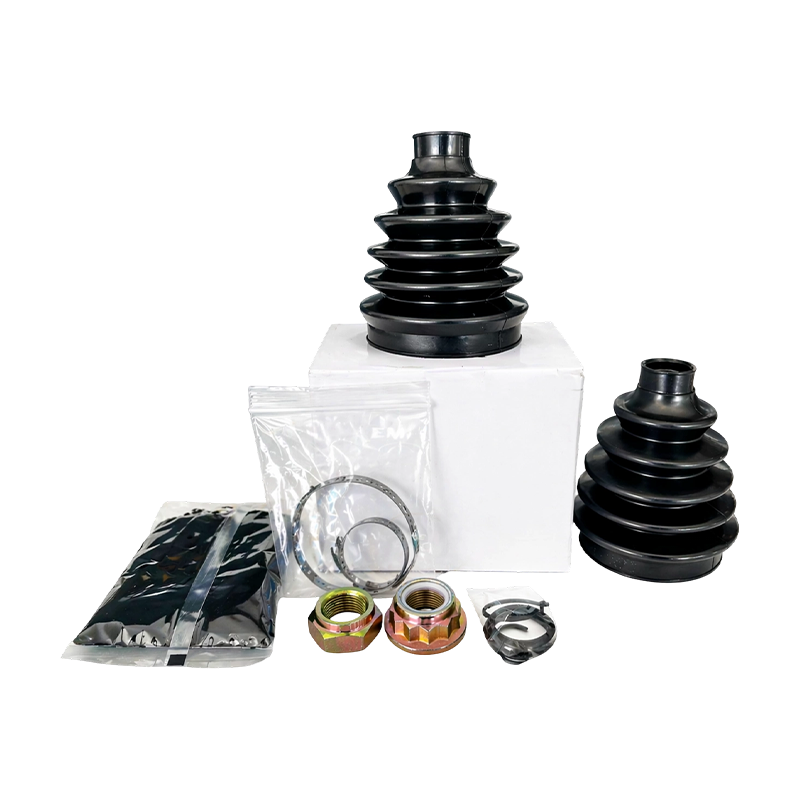 CV Boot KitsOur CV Joint Repair Kits are engineered to meet OEM-grade maintenance standards. Beyond providing essential components, we are committed to delivering comprehensive, a...View Product →
Off-road machines deserve a separate mention. ATV, UTV and side-by-side axle shafts live with far more suspension travel and far more impact load than a road car, so a bent tube or a joint pushed past its working angle is normal wear rather than an exception. When the shake starts, check the shaft for straightness before you check anything else.
If you take one thing away, make it this: unbalance leaves a road-speed signature. One narrow band of speed shakes, and either side of it the vehicle is smooth. Confirm that pattern first, then check tube straightness and joint freedom, and only after that reach for correction weights. Anything else is guesswork with a welding torch.
MAIL US
CONTACT US
+86 133 0665 0391
MAIL US
No. 169 Songpu Road, Cidong Industrial Zone, Cixi City, Ningbo City, Zhejiang Province, China
 OEM/ODM Automotive Chassis Sealing Components Manufacturer
EV Drivetrain Components Supplier